
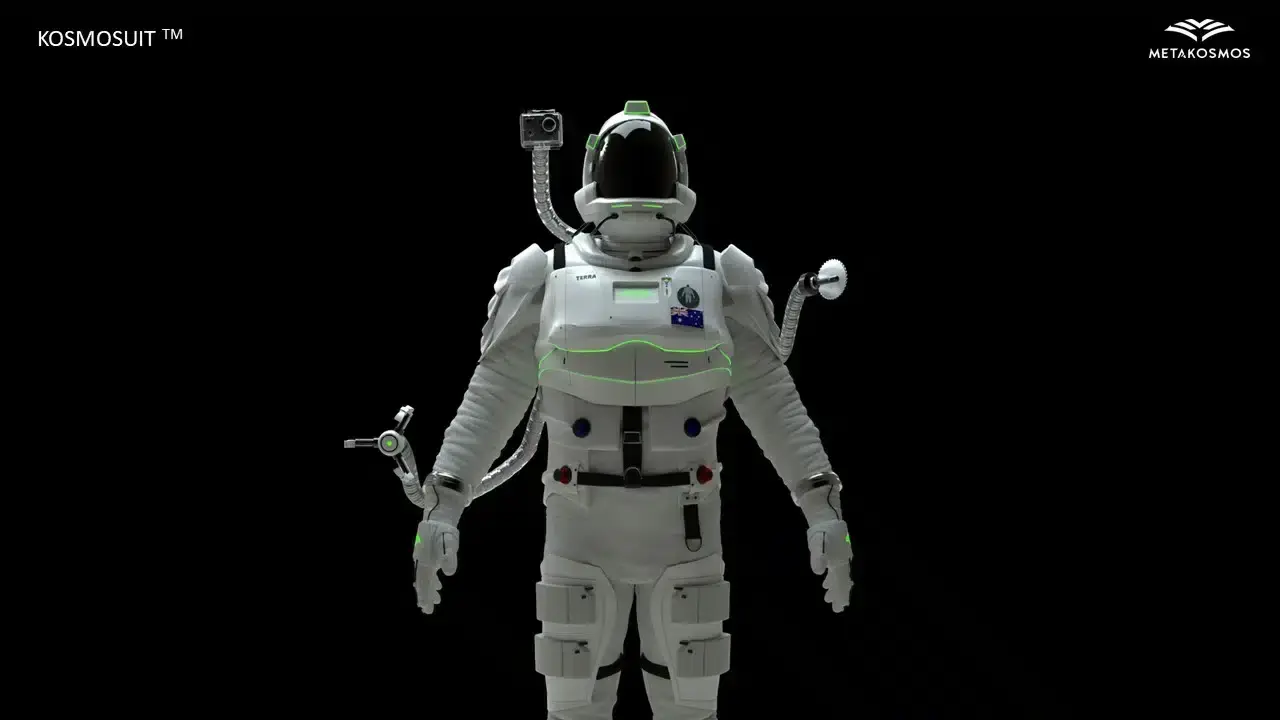
Artemis surface operations require human systems capability beyond what the historic supplier base supplies. NASA's shift to purchasing moonwalking services widened the supplier ecosystem deliberately.
The AxEMU developed for Artemis III builds on NASA's earlier exploration suit work. Its qualification campaign has included pressurised underwater testing at the Neutral Buoyancy Laboratory, thermal vacuum testing and elevated suit pressure trials.
FOUR ENTRY REQUIREMENTS
Standards fluency. NASA-STD-3001 covers human-system requirements across design, development, test, operations and maintenance, and includes suits within its scope.
Evidence generation. Agencies purchase evidence rather than capability claims, which requires owned or reliably accessible test infrastructure, calibrated and traceable instrumentation, and documentation from which an independent party could reproduce results.
Administrative registration. DUNS and NCAGE identifiers are prerequisites for contracting.
Relevant-environment demonstration. Technology readiness claims turn on conditions representative of operations, which is the function of field deployment platforms.
POSITION AVAILABLE
The realistic position for an allied supplier is subcontractor, supplying subsystems, components or validation services into established prime relationships.
Allied supply chain diversification supports that. The human systems supplier base is narrow, and qualifying allied second sources is a stated buyer interest.
TERRESTRIAL CONTRIBUTION
Sensing accuracy characterised on industrial and defence operators, thermal models validated across large populations, and failure mode libraries from field deployment all contribute to the evidence base a space programme requires.
Terrestrial demand also arrives earlier in the programme cycle, which is part of the rationale for four-domain capability.
TIMELINES
Human-rating timelines are measured in years.
References
- Metakosmos - PROVE
- Metakosmos - DEPLOY
- Metakosmos - Human Systems Infrastructure Platform
- Metakosmos - Domains
- Metakosmos - CORE
- Metakosmos - Space
- Metakosmos - Partners
- Metakosmos - IP & Compliance
- NASA — NASA Taps Axiom Space for First Artemis Moonwalking Spacesuits
- NASA — Spacesuit for Artemis III Moon Surface Mission Debuts
- NASA — Human Spaceflight and Aviation Standards
- NASA — Artemis III lunar spacesuit testing at the Neutral Buoyancy Laboratory