How to Evaluate Extreme Environment Suit Systems: A Buyer’s Guide for Aerospace and Defense Teams
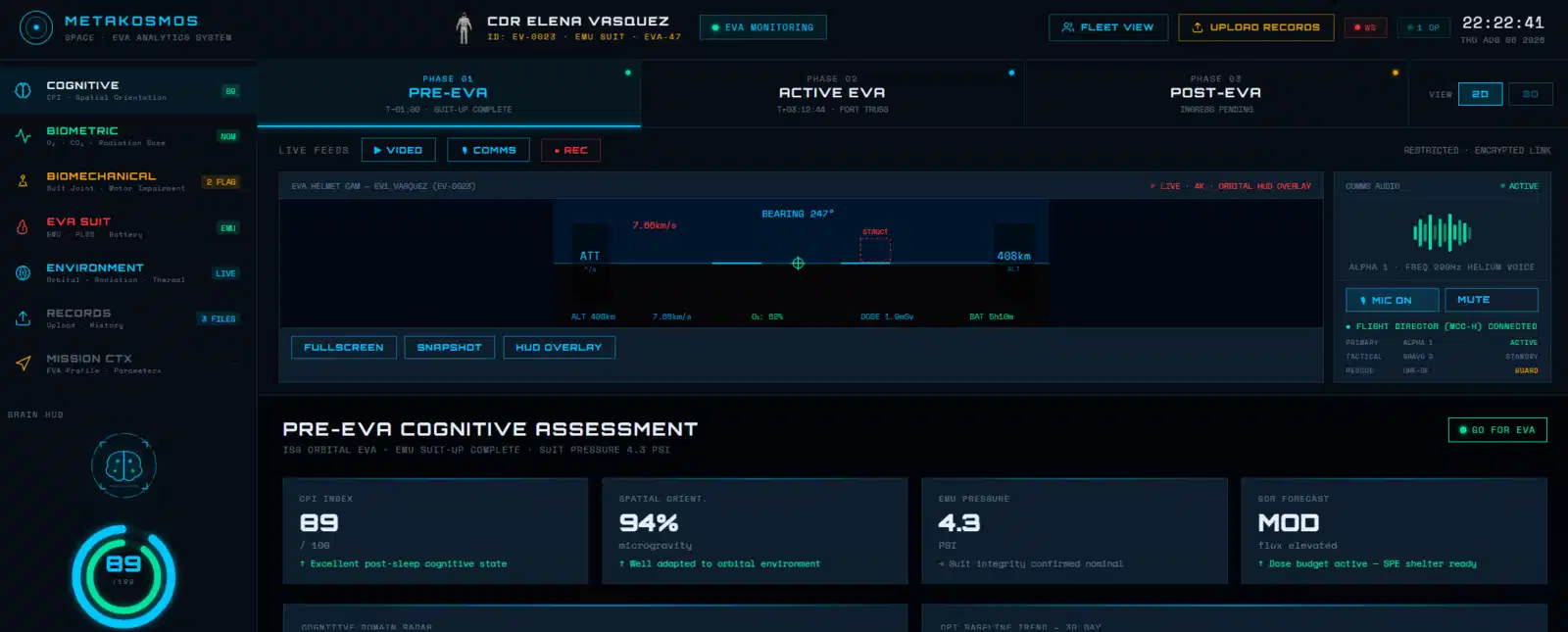
Extreme environment suit systems is becoming an important search theme because extreme-environment operations are moving from standalone protective equipment to integrated human systems. For space, defense, aviation, subsea and hazardous industrial teams, the central question is no longer whether a suit, garment or support device can protect the wearer in isolation. The better question is whether the complete human-suit-mission system can be monitored, validated and trusted before it is exposed to operational stress.
EVA and IVA suit design start from different operating assumptions. EVA systems must support work outside a vehicle or habitat, while IVA systems are usually designed for emergency protection, launch and re-entry scenarios inside a spacecraft.
The technical challenge is systems integration. Pressure protection, thermal management, mobility, communications, physiological monitoring, sensor data, software, test rigs and operating procedures all influence each other. A suit that performs in a laboratory can behave differently when the user is fatigued, under time pressure, carrying tools, communicating with a team or working inside a thermal, pressure, chemical or altitude extreme.
For aerospace and defense buyers, the most useful evaluation lens is evidence. A modern human systems platform needs traceable requirements, repeatable test methods, calibrated sensors, data architecture, failure-mode analysis and clear acceptance criteria. Telemetry adds value when it helps engineers see what the suit and user are doing in real time, while test infrastructure adds value when it reduces uncertainty before human trials or field deployment.
References
Explore the Metakosmos Platform
Learn how Metakosmos connects human systems, telemetry, validation and extreme-environment readiness for mission teams.